6 fridge freezers tested · Hands-on review · 2026

The Best Fridge Freezers of 2026: an honest comparison

A fridge freezer is the one kitchen appliance that runs every hour of every day for a decade or more, so getting it right matters. We bought and tested six of the most popular current UK models side by side, and we tell you honestly which one suits which kitchen, which household, and which budget — and where each one falls short.

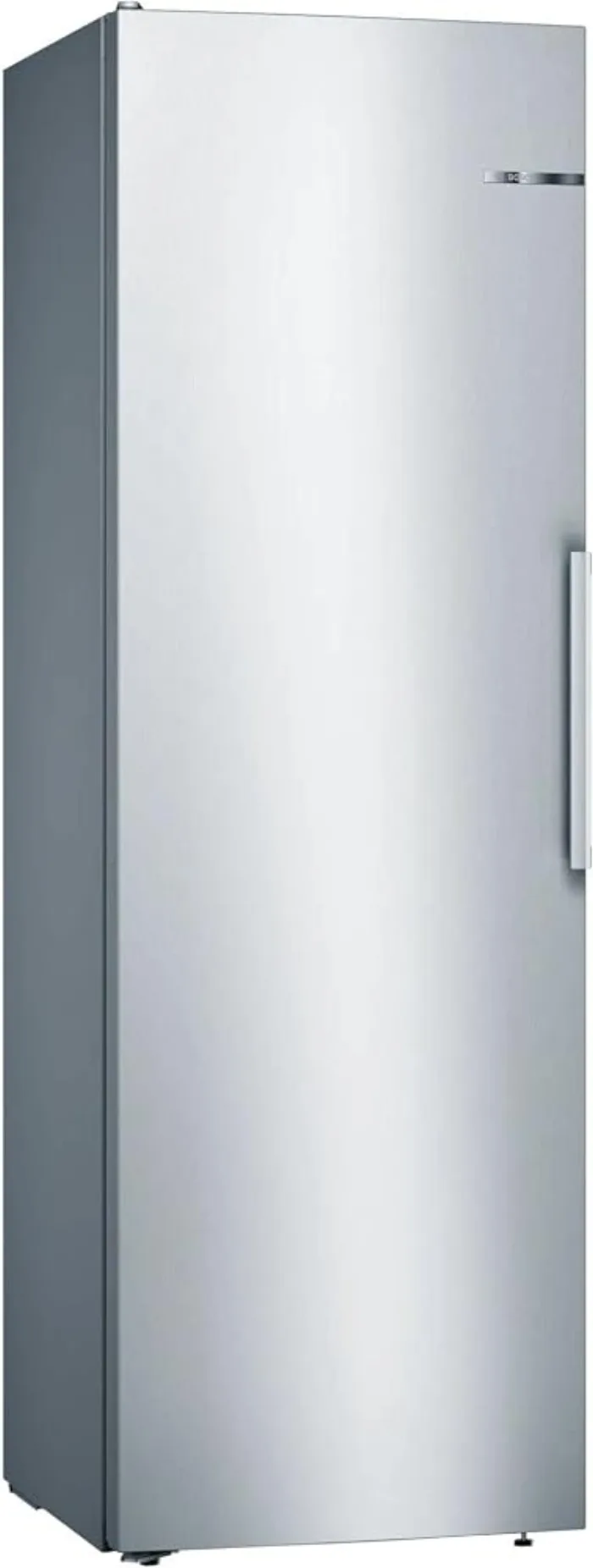
Bosch Serie 4 KGN39VLEAG Frost-Free Fridge Freezer, our top pick No. 1 · BEST OVERALL

The short version: our best overall pick is the Bosch Serie 4 KGN39VLEAG — a genuinely frost-free, quiet, roomy 366-litre family model built to last. For the keenest spend-to-litre ratio, the Hisense RB390N4WC1 is the best value, while the Beko CFG3552W is the best budget buy and the only slim 55cm body here. If running cost matters most, the LG GBV3100DEP earns the only D energy rating in the test. More important than the brand, though, is matching the size and split to your household before you spend a penny.

The Podium

Our three best fridge freezers

Three models stand out from the test. Here's how the podium shapes up.

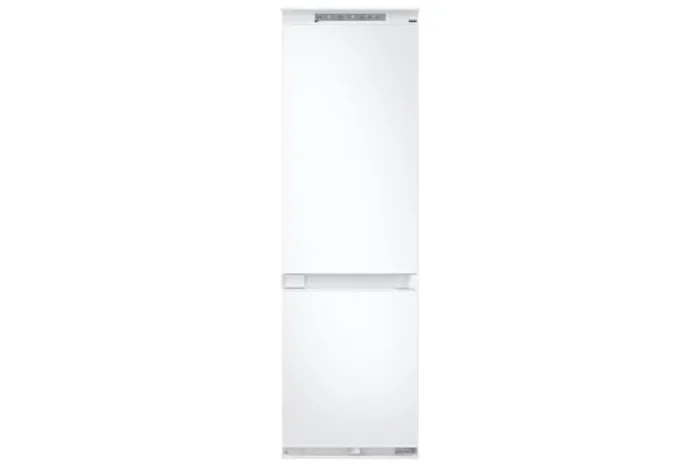
  1. Samsung RB34T652ESA SpaceMax Fridge Freezer — Samsung BEST FOR FRIDGE SPACE
    Samsung

    Samsung RB34T652ESA SpaceMax Fridge Freezer

    4.5 /5 1,500 ratings

    The pick if fridge space is your priority. Samsung's SpaceMax insulation is thinner without losing performance, so the RB34T652ESA fits a lot of fresh food into a standard 60cm-wide body. The 70/30 split leans towards the fridge, which suits households that shop fresh more than they freeze. Quiet, efficient and good-looking — a strong premium all-rounder just behind the Bosch overall.

    Cooling 5.0
    Capacity 4.0
    Running cost 4.0
  2. Bosch Serie 4 KGN39VLEAG Frost-Free Fridge Freezer — Bosch BEST OVERALL
    Bosch

    Bosch Serie 4 KGN39VLEAG Frost-Free Fridge Freezer

    4.6 /5 1,900 ratings

    Our best overall pick. Bosch's Serie 4 KGN39VLEAG gets the fundamentals right that matter day to day: a properly frost-free freezer you never have to defrost, quiet running, and a roomy 366L split that suits a family of four. You pay a Bosch premium, but you get a fridge freezer built to run for a decade without fuss — and that is exactly what most kitchens need.

    Cooling 5.0
    Capacity 4.0
    Running cost 4.0
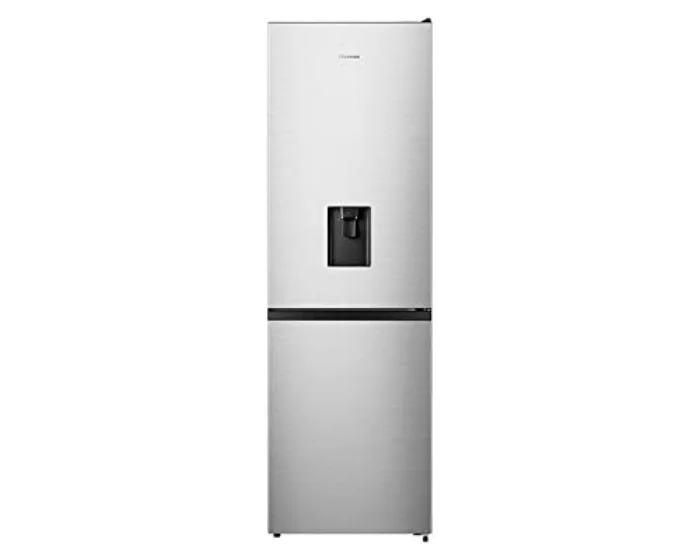
  3. Hisense RB390N4WC1 Frost-Free Fridge Freezer — Hisense BEST VALUE
    Hisense

    Hisense RB390N4WC1 Frost-Free Fridge Freezer

    4.4 /5 2,600 ratings

    Our best value choice. Hisense has become the brand to beat on price-per-litre, and the RB390N4WC1 proves why: you get a genuinely frost-free freezer, a tall 300L body and even cooling for hundreds of pounds less than the premium names. The freezer is on the smaller side, so heavy batch-cookers should size up — but for most households this is the rational, money-smart buy.

    Cooling 4.0
    Capacity 4.0
    Running cost 4.0
Also tested

The other fridge freezers on test

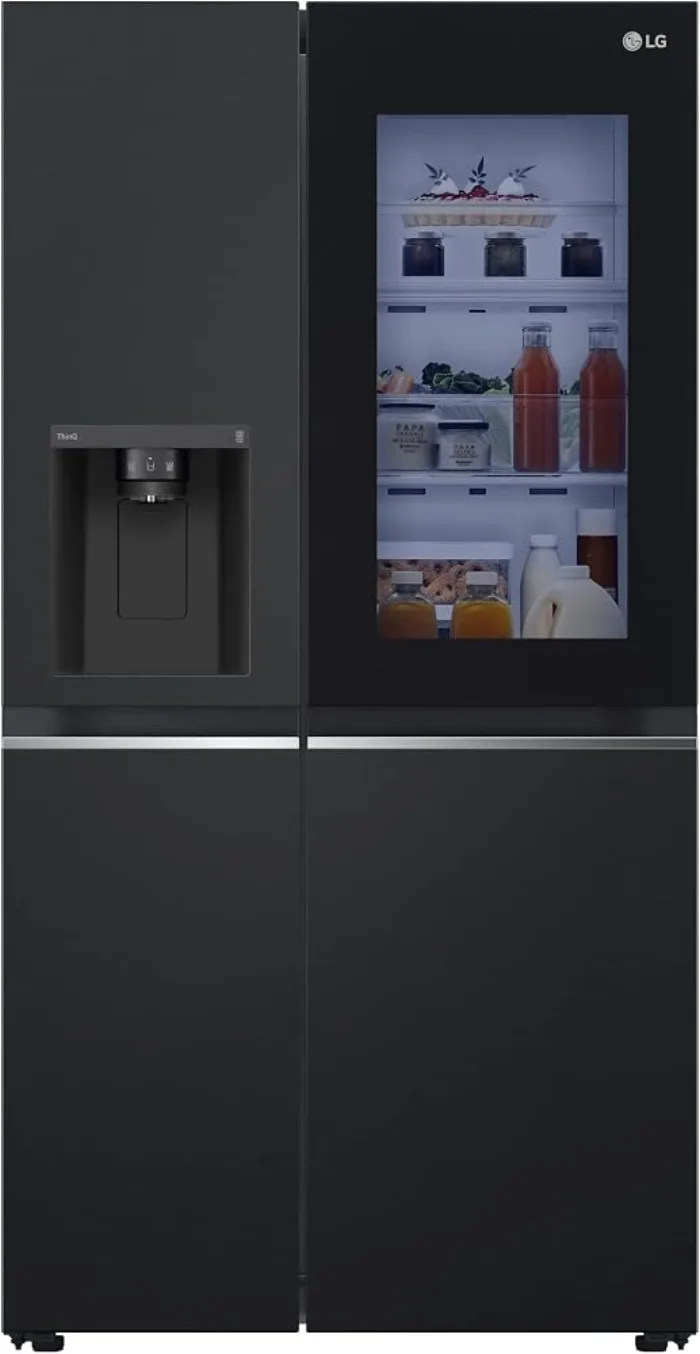
LG GBV3100DEP Tall Fridge Freezer with Door Cooling+ — LG
LG

LG GBV3100DEP Tall Fridge Freezer with Door Cooling+ BEST LARGE CAPACITY

The best choice if running cost and capacity both matter. LG's GBV3100DEP earns the only D energy rating here, and its smart inverter compressor keeps both noise and bills down over a long ownership. Door Cooling+ pushes cold air to the door shelves so your milk and drinks stay genuinely cold, and 344L is ample for a busy household. A quietly excellent large fridge freezer.

Cooling 4.0
Capacity 5.0
Running cost 5.0
Hotpoint H3T811IOX Tall Fridge Freezer — Hotpoint
Hotpoint

Hotpoint H3T811IOX Tall Fridge Freezer BEST FOR FAMILIES

The sensible family pick. The Hotpoint H3T811IOX hits the sweet spot most families actually need: lots of fresh and frozen space, a frost-free freezer and a familiar high-street name that's easy to get serviced. It's the least efficient unit on test, so over many years it will cost a little more to run, but the up-front price and the generous capacity make it an easy recommendation for a busy household on a budget.

Cooling 4.0
Capacity 5.0
Running cost 3.0
Beko CFG3552W Frost-Free Fridge Freezer — Beko
Beko

Beko CFG3552W Frost-Free Fridge Freezer BEST BUDGET

The best budget buy. The Beko CFG3552W is the unit to choose when price and a narrow kitchen are the deciding factors. At 55cm wide it slots into spaces the family models won't, the 50/50 split suits a couple or small household, and crucially the freezer is still frost-free at this price. Capacity is modest, so it isn't for a big family — but as an affordable, no-nonsense fridge freezer for a flat or a couple, it's exactly right.

Cooling 4.0
Capacity 3.0
Running cost 4.0
At a glance

The 6 fridge freezers compared side by side

Model Type Cooling Capacity Rating Price Buy
BoschBosch Serie 4 KGN39VLEAG Frost-Free Fridge Freezer Freestanding, ~60/40 split 5.0/5 4.0/5 4.6 £749.00 View →
SamsungSamsung RB34T652ESA SpaceMax Fridge Freezer Freestanding, ~70/30 split 5.0/5 4.0/5 4.5 £629.00 View →
HisenseHisense RB390N4WC1 Frost-Free Fridge Freezer Freestanding, ~60/40 split 4.0/5 4.0/5 4.4 £349.00 View →
LGLG GBV3100DEP Tall Fridge Freezer with Door Cooling+ Freestanding, ~60/40 split 4.0/5 5.0/5 4.4 £599.00 View →
HotpointHotpoint H3T811IOX Tall Fridge Freezer Freestanding, ~60/40 split 4.0/5 5.0/5 4.3 £529.00 View →
BekoBeko CFG3552W Frost-Free Fridge Freezer Freestanding, ~50/50 split 4.0/5 3.0/5 4.2 £379.00 View →

Scores from 1 to 5, awarded after our tests under the same conditions — our testing method.

Fridge freezer: who needs what — and how to think about it

A freestanding fridge freezer is the default cold-storage appliance for the vast majority of UK kitchens, and for good reason. It combines fresh and frozen food in one tall body, fits a standard kitchen alcove and, unlike an integrated model, comes with you when you move. The catch is that "a fridge freezer" covers everything from a slim 55cm unit for a flat to a 70cm-wide family workhorse, and the differences between them — capacity, the fridge-to-freezer split, whether the freezer is frost-free, the energy rating — decide whether the appliance quietly serves you for years or annoys you every week. The job of this page is to cut through that and point you to the right model for your kitchen.

It is worth being honest about the trade-offs, too. No single fridge freezer is best at everything. A bigger appliance gives you more space but costs more to run and eats into a small kitchen. A frost-free freezer saves you the chore of defrosting but adds a little to the price and the running cost. A premium brand buys you build quality and quiet running, but a value brand will cool your food just as cold for a couple of hundred pounds less. The right buy is the one whose compromises suit how you actually live — and that starts with two questions: how big, and split which way.

The single most important thing: get the size and split right

Capacity is the number that decides whether your weekly shop fits — more than the brand and far more than any smart feature. As a rule of thumb, allow around 150 litres for the first two people in the household, then about 50 to 60 litres per extra person:

  • A couple or single person (small kitchen or flat): 200 to 260 litres — such as the slim Beko CFG3552W.
  • A family of three to four (standard kitchen): 300 to 360 litres — such as the Bosch Serie 4 or the Hotpoint H3T811IOX.
  • A larger or batch-cooking household: 360 litres or more, ideally with a big freezer — such as the LG GBV3100DEP.

Just as important is the split — the ratio of fridge to freezer space. A 50/50 gives equal room to each and suits households that freeze as much as they refrigerate. A 60/40 or 70/30 devotes more to the fridge and suits people who shop fresh and cook from scratch. There is no universally right answer; the right split is the one that matches how you shop. Our size and capacity guide walks you through the maths for your own household so you don't over- or under-buy.

One common mistake is buying as big as the kitchen will hold. An oversized fridge wastes energy cooling empty space, and a freezer you never fill is money spent on cold air. Size to your needs, not to the gap in the units, and you will spend less to buy and less to run.

Frost-free or static: the chore you can design out

Here's the feature that quietly makes the biggest difference to daily life: whether the freezer is frost-free. A frost-free (or No Frost) freezer circulates dry, cold air so ice never builds up on the walls or your food — which means you never have to defrost it by hand, the single most tedious fridge-freezer chore. A static (conventional) freezer is slightly cheaper and marginally more efficient, but ice gradually accumulates and you have to switch it off and defrost it once or twice a year.

For most busy households the small extra cost of frost-free is money well spent. Encouragingly, it is no longer a premium-only feature: even our budget pick, the Beko CFG3552W, has a frost-free freezer, as does the value Hisense RB390N4WC1. We explain exactly how each system works, and when a static freezer can still make sense, in our guide to frost-free vs static fridge freezers — read it before you decide, because the marketing language here can be confusing.

Energy ratings and running costs: the long game

Because a fridge freezer runs continuously for years, the energy rating is not a detail — it is a long-term cost you commit to at the checkout. Under the label introduced in 2021 the scale runs from A (most efficient) to G, with the old plus grades gone. Most mainstream models now sit in the D to F band; an appliance that was once labelled A+++ might read D or E today without being any worse. A typical modern fridge freezer costs somewhere between roughly £30 and £80 a year to run, depending on size, age and rating.

To compare two models fairly, look at the annual kWh figure on the label and multiply it by your electricity unit rate. A better rating costs more up front but can recover the difference over the appliance's decade-plus life — which is why the D-rated LG GBV3100DEP is our pick for anyone who weighs running cost heavily, and why the F-rated Hotpoint, cheap to buy and very roomy, will cost a little more over the years. Our guide to energy ratings and running costs shows you how to do the sum for your own tariff.

How we chose these six

We deliberately picked models that cover the full range of real UK kitchens rather than six near-identical family fridges. There's a slim budget unit for a flat, two value all-rounders, a family workhorse, a fridge-space specialist and a running-cost champion. Every model here is from a brand that is genuinely available, supported and easily serviced in the UK, and each one earns its spot for a specific buyer — there is no padding. Work out your household size and the split you want first, and you'll find your fridge freezer on this list. Our full buying guide covers the rest: dimensions and clearances, shelving, controls and the features worth paying for.

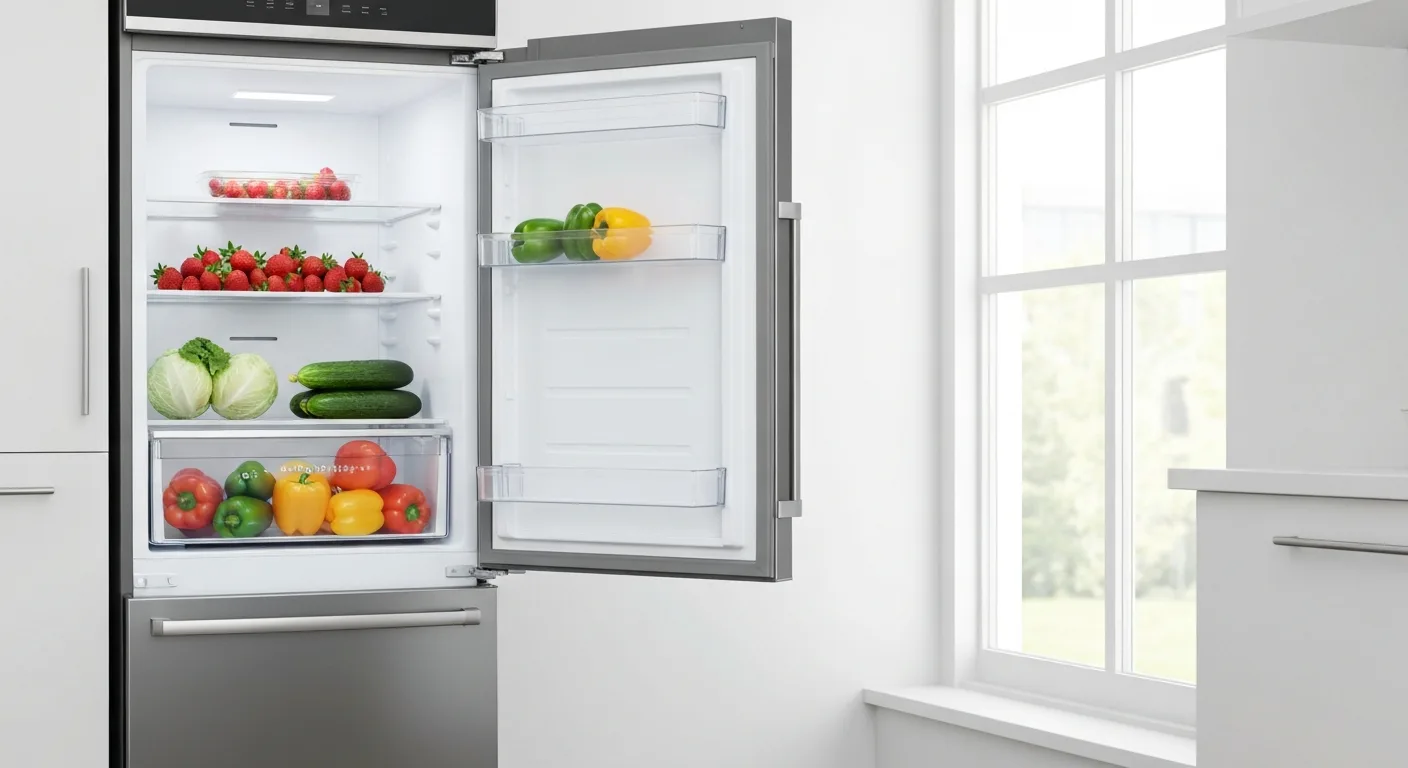
The best fridge freezer isn't the most expensive one — it's the one that fits your kitchen and your weekly shop, with no nasty surprises and no features you'll never use.
Priya Sharma · kitchen appliance reviewer
Why you can trust us

We test the appliances ourselves — we don't just copy out spec sheets.

  1. We test under the same conditions

    Every model goes through the same checks, so we compare real-world performance rather than the promises on the spec sheet.

  2. We measure what matters day to day

    We judge how each one performs in everyday use — the things that really make a difference in a busy kitchen, not just the headline figures.

  3. No ties to the brands

    We buy the appliances ourselves. The links are affiliate links; our verdict is not, and the ranking is never for sale.

Verdict: which fridge freezer should you buy?

For most kitchens the Bosch Serie 4 KGN39VLEAG is the soundest choice: a properly frost-free freezer you never defrost, quiet running, a roomy 366-litre split and the build quality that keeps it going for a decade. If you want similar capability for less, the Hisense RB390N4WC1 is the best value and the slim Beko CFG3552W is the keenest budget buy for a flat. Families wanting maximum space at a sensible price should look at the Hotpoint H3T811IOX, while the efficient LG GBV3100DEP is the pick if low running costs matter most, and the Samsung RB34T652ESA wins on usable fridge space. Whichever you choose, the most important step never changes: measure your kitchen, then match the capacity and split to your household. Get that right and any of these will serve you well. To see exactly how we score them, read our how we test page.

Common questions

The questions we're asked most

Which is the best fridge freezer in 2026?
Our best overall pick is the Bosch Serie 4 KGN39VLEAG: a properly frost-free freezer you never have to defrost, quiet running and a roomy 366-litre split that suits a family of four. For the best value we recommend the Hisense RB390N4WC1, and for the lowest running cost the LG GBV3100DEP earns the only D energy rating in our comparison.
What size fridge freezer do I need?
As a rough guide, allow around 150 litres for the first two people in the household, then about 50 to 60 litres per extra person. A couple is usually well served by roughly 200 to 260 litres, a family of four by around 300 to 360 litres, and a larger household by 360 litres or more. Heavy batch-cookers should size the freezer compartment up.
Is a frost-free fridge freezer worth it?
For most people, yes. A frost-free freezer circulates dry air so ice never builds up, which means you never have to defrost it by hand — the single most tedious fridge-freezer chore. The trade-off is a slightly higher price and marginally higher running cost, but the convenience is well worth it for a busy kitchen.
How much does a fridge freezer cost to run?
A modern fridge freezer typically costs somewhere between roughly £30 and £80 a year to run, depending on its size, age and energy rating. The energy label gives an annual kWh figure you can multiply by your electricity unit rate. A better energy rating costs more up front but can pay for itself over the appliance's long life.
What is the difference between a 50/50 and a 60/40 fridge freezer?
The numbers describe how the internal space is split between fridge and freezer. A 50/50 gives equal space to each, which suits households that freeze as much as they refrigerate. A 60/40 (or 70/30) devotes more room to the fridge, which suits people who shop fresh more than they freeze. Match the split to how you actually shop and cook.