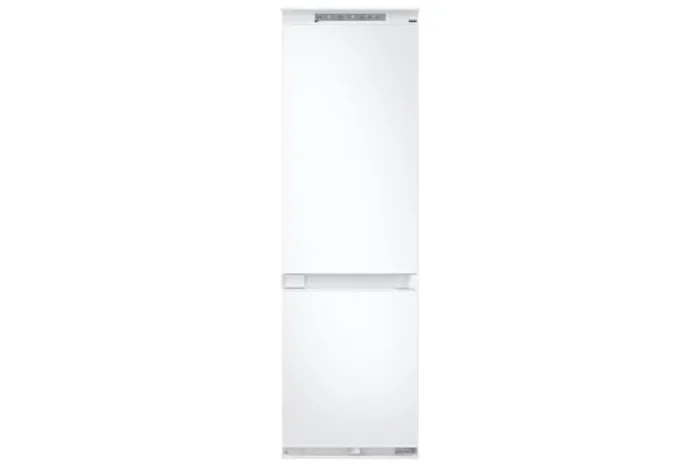
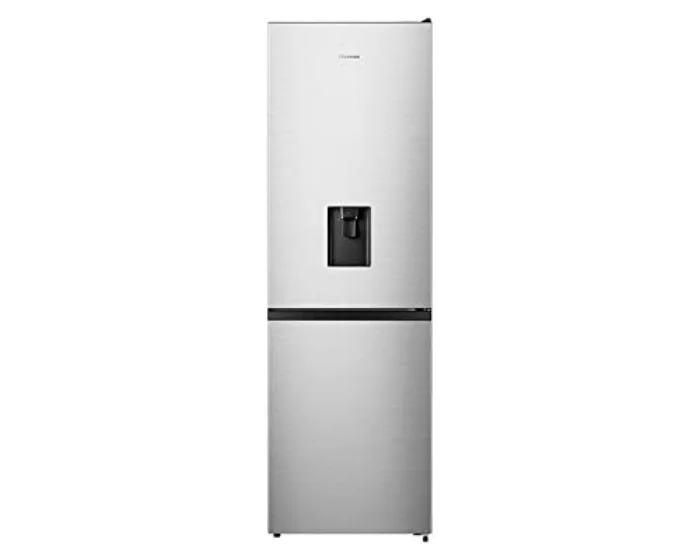
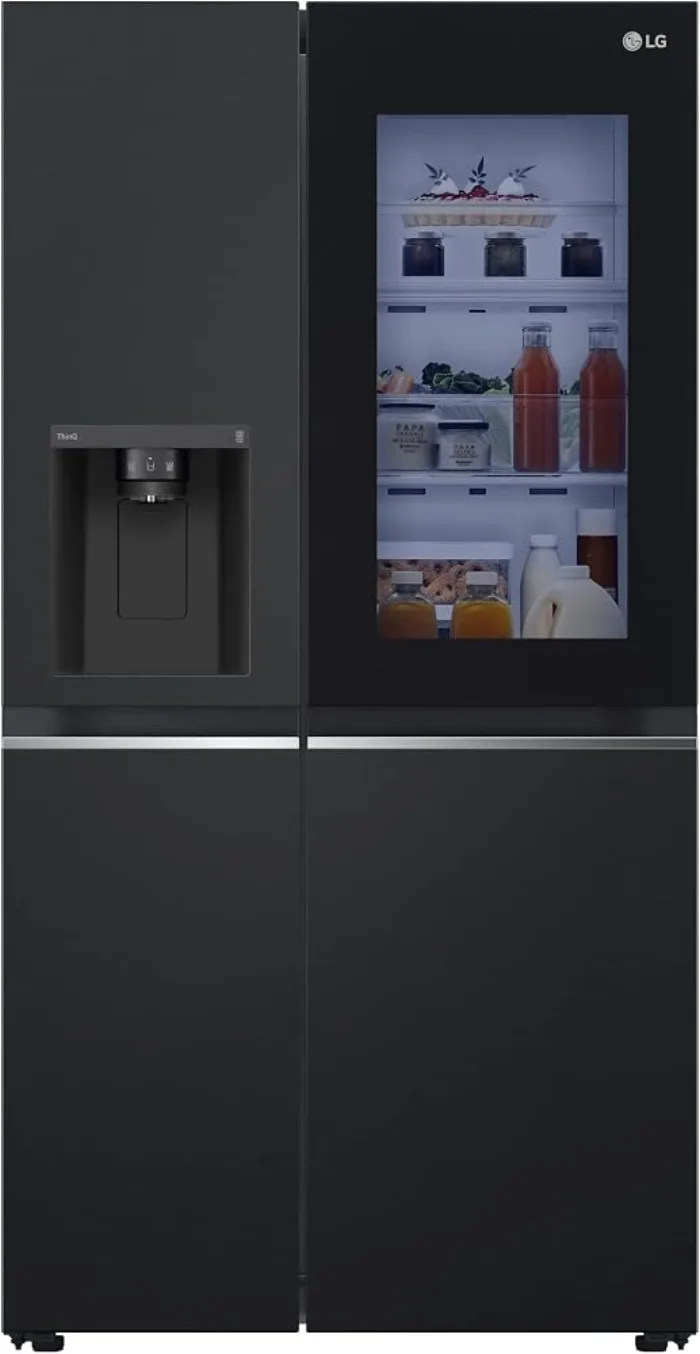
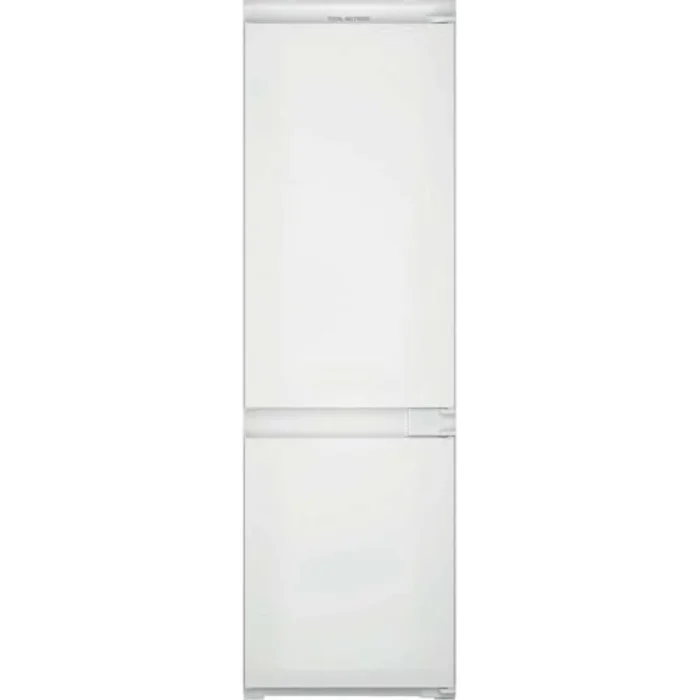
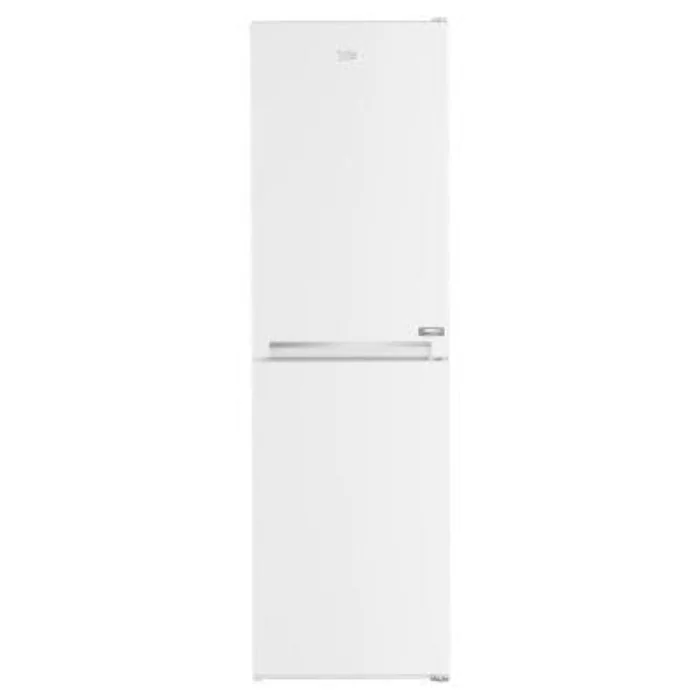
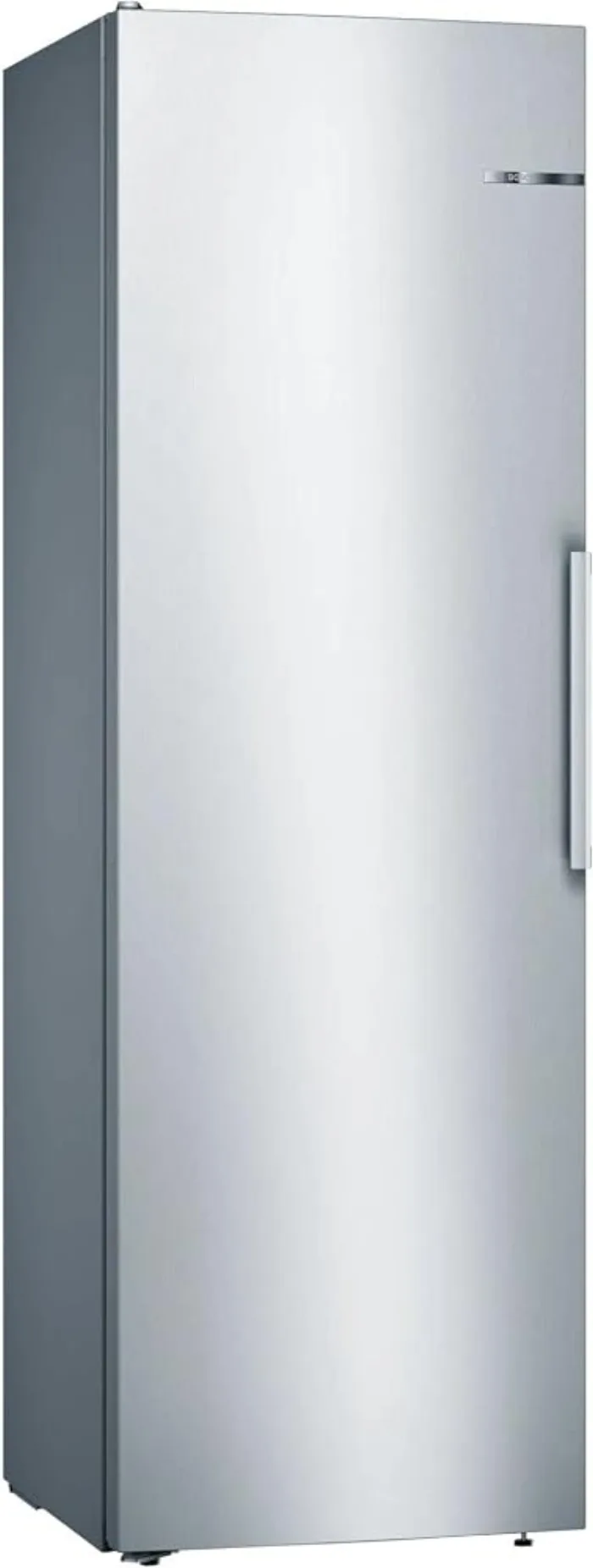
Capacity and split: the decisions that matter most
Capacity, measured in litres, decides whether your weekly shop fits — and it's the choice you'll feel every day. As a rule of thumb, allow around 150 litres for the first two people in the household, then about 50 to 60 litres per extra person. That puts a single person or couple at roughly 200 to 260 litres, a family of three to four at around 300 to 360 litres, and a larger or batch-cooking household at 360 litres or more. Treat those as a sensible starting point rather than a precise figure.
Just as important is the split — how the internal space is divided between fridge and freezer. A 50/50 gives equal room to each and suits households that freeze as much as they refrigerate. A 60/40 or 70/30 devotes more to the fridge and suits people who shop fresh and cook from scratch. There is no universally correct split; the right one matches your habits. A common mistake is buying as big as the kitchen will hold — an oversized fridge wastes energy cooling empty space, so size to your needs, not to the gap in the units. Our dedicated size and capacity guide does the maths for your household.
Frost-free or static
One feature quietly makes the biggest difference to daily life: whether the freezer is frost-free. A frost-free (No Frost) freezer circulates dry, cold air so ice never builds up, which means you never have to defrost it by hand — the single most tedious cold-storage chore. A static (conventional) freezer is slightly cheaper and marginally more efficient, but ice gradually accumulates and you have to switch it off and defrost it once or twice a year. For most busy households the small extra cost of frost-free is money well spent, and it's no longer a premium-only feature: even budget models now offer it. We explain the trade-offs in full in our guide to frost-free vs static fridge freezers.
Energy ratings and running cost
Because a fridge freezer runs continuously for years, the energy rating is a long-term cost you commit to at the checkout. Under the label introduced in 2021 the scale runs from A (most efficient) to G, with the old plus grades gone — so a model once labelled A+++ might read D or E today without being any worse. Most mainstream models sit in the D to F band, and a typical modern fridge freezer costs roughly £30 to £80 a year to run. To compare two models fairly, take the annual kWh figure from the label and multiply it by your electricity unit rate. A better rating costs more up front but can recover the difference over the appliance's decade-plus life. Our guide to energy ratings and running costs shows you how to do the sum for your own tariff.
Features worth paying for — and ones you can skip
A few features genuinely matter. Frost-free, as above, is the big one. A fast-freeze function earns its keep if you buy in bulk, dropping the freezer temperature briefly to protect food already inside when you add a big load. Good shelving — adjustable glass shelves, a proper salad crisper and useful door bins — makes a fridge far more usable than the headline litre figure suggests. Door cooling, which pushes cold air to the door shelves, keeps milk and drinks at a more even temperature.
Other features are nice-to-have rather than deciding factors. WiFi and app control can tell you if a door's been left open, but they rarely justify a price jump on their own. Water and ice dispensers add convenience but also cost, complexity and a plumbing requirement. Brand buys you build quality, support and resale confidence — worth paying for if you value longevity, but never a substitute for the right capacity and split.